Address
304 North Cardinal
St. Dorchester Center, MA 02124
Work Hours
Monday to Friday: 7AM - 7PM
Weekend: 10AM - 5PM
Address
304 North Cardinal
St. Dorchester Center, MA 02124
Work Hours
Monday to Friday: 7AM - 7PM
Weekend: 10AM - 5PM
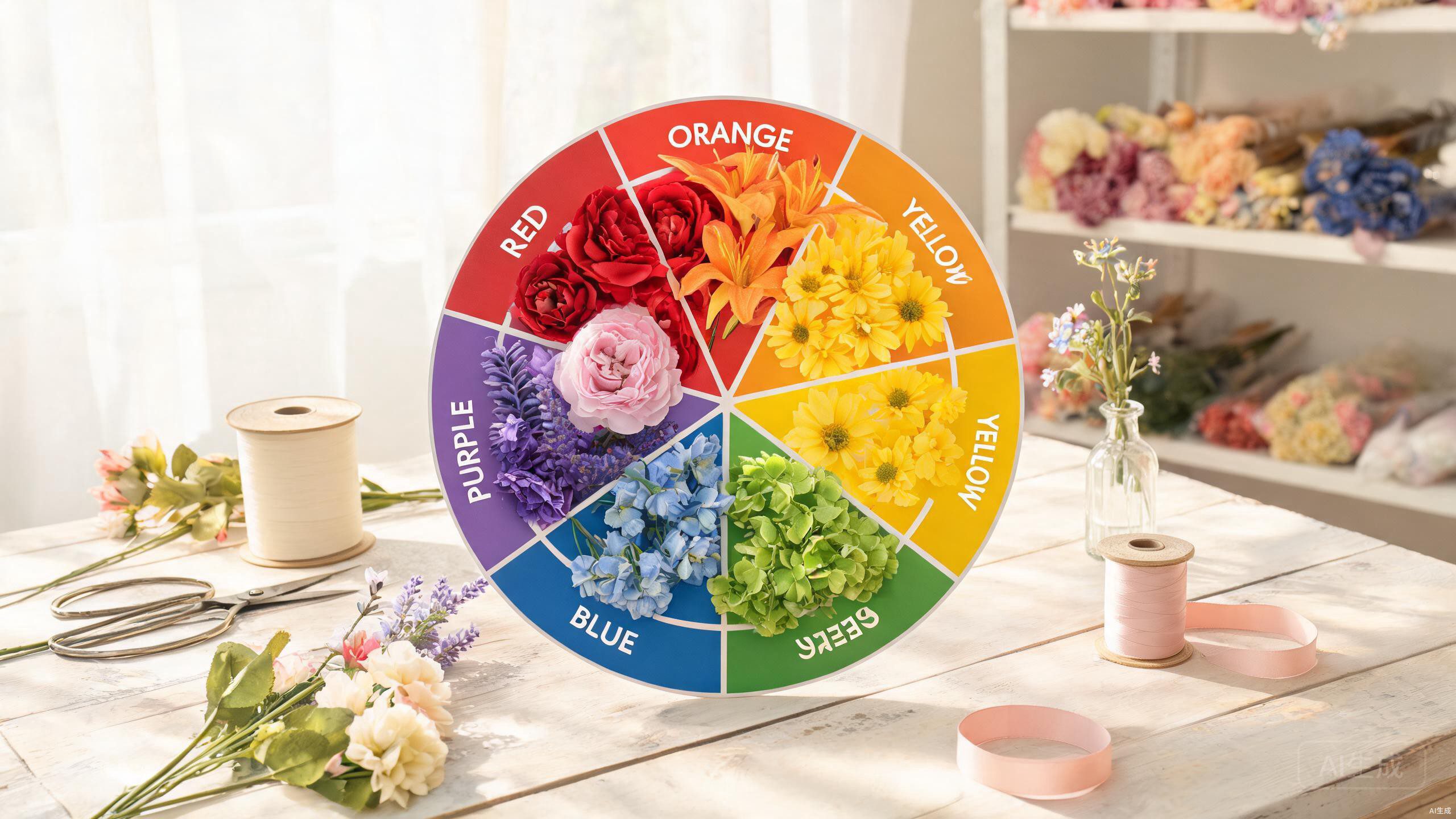
Understanding color theory transforms your floral arrangements from random to remarkable. Whether you’re styling silk flowers for your home or designing a special event, these fundamental principles will help you create harmonious, visually stunning displays every time.
The color wheel is your essential tool for floral design. It organizes colors into primary (red, blue, yellow), secondary (orange, green, purple), and tertiary (combinations like red-orange or blue-green). Understanding relationships on the color wheel helps you create intentional, beautiful palettes.
Using different shades and tints of a single color creates sophisticated, elegant displays. A monochromatic pink arrangement might combine blush, rose, and deep magenta blooms. This approach feels intentional and refined, ideal for minimalist or contemporary spaces.
Colors opposite each other on the color wheel create vibrant contrast. Orange and blue, red and green, or yellow and purple make dynamic, eye-catching arrangements. Use one color as dominant and the other as an accent to avoid overwhelming the eye.
Colors next to each other on the wheel create serene, harmonious arrangements. Yellow, orange-yellow, and orange blend naturally. This approach feels gentle and cohesive, making it ideal for calming spaces like bedrooms and bathrooms.
Three colors equally spaced on the color wheel create balanced, lively arrangements. Red, yellow, and blue offer a bold, festive look. For a more subtle approach, use tinted versions like pink, pale yellow, and soft blue.
White, cream, and green serve as the backbone of many beautiful arrangements. White flowers make other colors pop, while greenery provides structure and natural transitions. A mostly-neutral arrangement with a single pop of color creates dramatic impact.
Your arrangement should complement its surroundings. In a room with warm-toned walls, choose flowers in warm colors or neutrals. In colorful rooms, white or monochromatic arrangements provide a calming counterpoint. typically consider the background where your flowers will live.
Nature provides color cues for each season. Spring favors pastels, summer calls for brights, autumn embraces warm earth tones, and winter leans toward whites and deep greens. Following these natural cycles keeps your decor feeling timely and connected to the world outside.
Master the art of color in your floral designs. Explore our silk flowers in every color to bring your vision to life.
Disclaimer: This article is for informational and inspirational purposes only. Product availability and styles may vary. Please visit our store for current offerings.
Tags: color theory, floral design, flower colors, arrangement basics